The Role of Chatbots and AI Tutors in Personalized Education
Discover the role of chatbots and AI tutors in personalized education. Get instant support and customized learning.
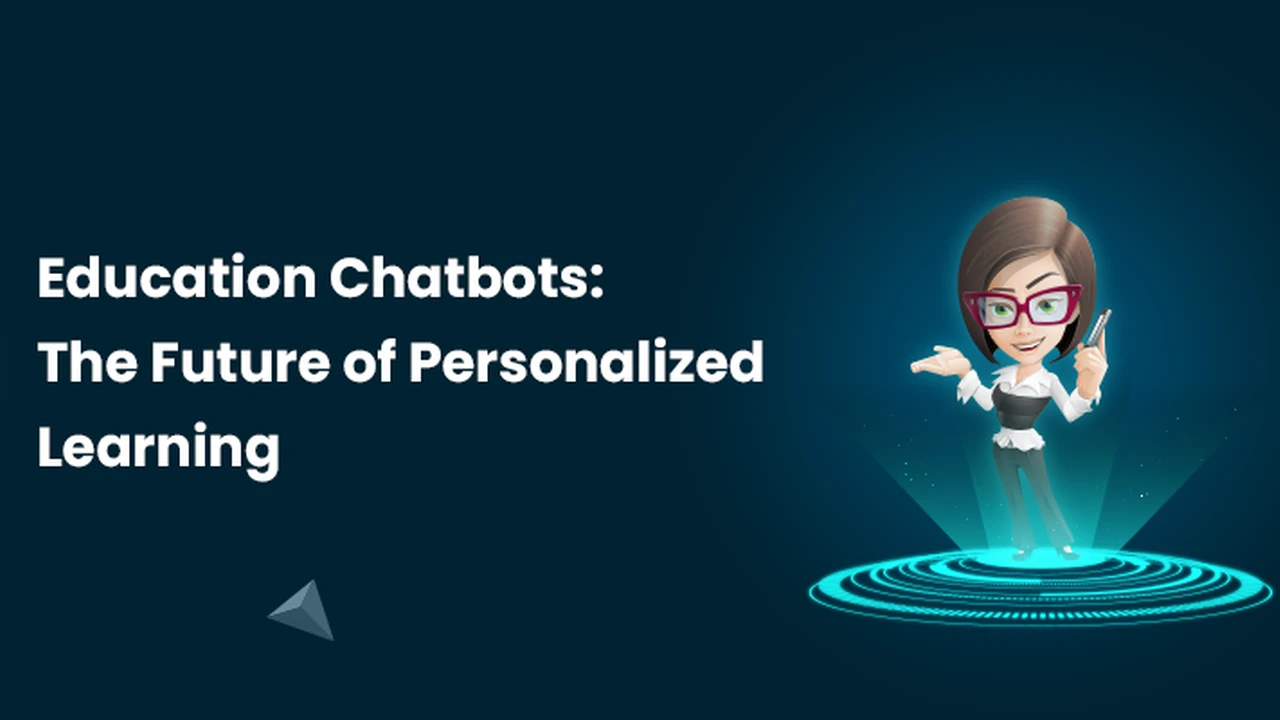
Discover the role of chatbots and AI tutors in personalized education. Get instant support and customized learning.
The Role of Chatbots and AI Tutors in Personalized Education
Hey there, future learners and educators! Ever felt like you needed a personal guide through the vast ocean of knowledge? Or maybe you wished for a tutor who's available 24/7, never gets tired, and always has the right answer? Well, what if I told you that this isn't just a futuristic dream anymore? We're talking about chatbots and AI tutors, and they're rapidly transforming how we learn, making education more personalized, accessible, and engaging than ever before. This isn't just about asking a bot a quick question; it's about a fundamental shift in how we interact with educational content and receive support.
Think about it: traditional classrooms, while valuable, often struggle with the 'one-size-fits-all' approach. Every student learns differently, at their own pace, and has unique strengths and weaknesses. This is where the magic of AI comes in. Chatbots and AI tutors are designed to adapt to individual learning styles, provide immediate feedback, and offer tailored content. They're like having a super-smart, infinitely patient mentor right at your fingertips. From helping you grasp complex concepts to practicing a new language, these digital companions are becoming indispensable tools in the modern learning landscape. Let's dive deep into how these intelligent systems are reshaping personalized education, explore some of the coolest products out there, and see how they stack up against each other.
Understanding AI Tutors and Chatbots in Learning What's the Big Deal
So, what exactly are we talking about when we say 'AI tutors' and 'chatbots' in an educational context? While often used interchangeably, there's a subtle but important distinction. Chatbots are typically designed for conversational interactions, answering questions, providing information, and guiding users through processes. Think of them as intelligent FAQs or virtual assistants. AI tutors, on the other hand, often encompass a broader range of functionalities, including assessing understanding, providing personalized learning paths, offering practice exercises, and even simulating real-world scenarios. They're more like a comprehensive digital mentor.
The 'big deal' is their ability to personalize the learning experience. Imagine a student struggling with a particular math concept. Instead of waiting for the next class or a teacher's availability, an AI tutor can immediately identify the specific area of difficulty, provide alternative explanations, offer practice problems, and even suggest supplementary resources. This immediate, targeted support is a game-changer. For language learners, a chatbot can provide endless opportunities for conversational practice, correcting grammar and pronunciation in real-time. This level of individualized attention was once a luxury reserved for private tutoring, but AI is making it scalable and accessible to millions.
Furthermore, these tools can analyze vast amounts of data about a student's performance, identifying patterns, predicting future challenges, and optimizing the learning journey. This data-driven approach ensures that the education provided is not only personalized but also highly effective. It's about moving beyond rote memorization to fostering genuine understanding and skill development.
Key Benefits of AI Powered Learning Assistants Personalized Learning Paths and Instant Feedback
The advantages of integrating AI tutors and chatbots into education are numerous and impactful. Let's break down some of the most significant benefits:
Personalized Learning Paths Tailoring Education to Every Student
One of the most compelling benefits is the creation of truly personalized learning paths. AI systems can assess a student's prior knowledge, learning style, and pace, then adapt the curriculum accordingly. If a student grasps a concept quickly, the AI can move them forward to more advanced topics. If they're struggling, it can provide additional resources, different explanations, or more practice. This ensures that no student is left behind, and no student is held back. It's about optimizing the learning journey for maximum efficiency and engagement.
Instant Feedback and Remediation Immediate Support for Learners
Gone are the days of waiting for a teacher to grade an assignment to understand where you went wrong. AI tutors provide instant feedback on quizzes, assignments, and practice exercises. This immediate remediation is crucial for effective learning. Students can correct their mistakes in real-time, reinforcing correct understanding and preventing the development of misconceptions. This rapid feedback loop accelerates the learning process and builds confidence.
24/7 Accessibility and On-Demand Learning Anytime Anywhere Education
The traditional classroom has fixed hours, but learning doesn't. AI tutors and chatbots are available 24/7, allowing students to learn at their convenience, whether it's late at night, early in the morning, or during a commute. This flexibility is particularly beneficial for adult learners, working professionals, and students in different time zones. It democratizes access to education, breaking down geographical and temporal barriers.
Engaging and Interactive Learning Experiences Gamification and Conversational AI
Many AI tutors and chatbots incorporate gamification elements, making learning more fun and engaging. This could include points, badges, leaderboards, or interactive challenges. Conversational AI also makes the learning process more natural and less intimidating, especially for subjects that might otherwise feel dry or complex. This increased engagement can significantly improve retention and motivation.
Data-Driven Insights for Educators and Students Optimizing Teaching and Learning
AI systems collect valuable data on student performance, engagement, and progress. This data can provide educators with insights into common areas of difficulty, allowing them to refine their teaching strategies. For students, this data can highlight their strengths and weaknesses, helping them focus their efforts more effectively. It's a powerful tool for continuous improvement in both teaching and learning.
Top AI Tutors and Chatbots for Diverse Learning Needs Product Comparison
The market for AI-powered educational tools is booming, with a wide array of products catering to different subjects, age groups, and learning styles. Here's a look at some of the leading contenders, their features, typical use cases, and pricing models.
1. Khanmigo by Khan Academy AI Powered Learning Assistant
Overview: Khanmigo is Khan Academy's AI-powered learning assistant, designed to act as a tutor for students and a teaching assistant for educators. It's built on OpenAI's GPT-4 and integrated directly into Khan Academy's vast library of educational content.
Key Features:
- Personalized Tutoring: Khanmigo can explain concepts, guide students through problems without giving direct answers, and help them understand 'why' a solution works.
- Writing Coach: It offers feedback on writing assignments, helping students improve their essays and creative writing.
- Coding Assistant: For programming courses, it can help debug code and explain coding concepts.
- Teacher Tools: Educators can use Khanmigo to generate lesson plans, create quizzes, and analyze student progress.
- Safe and Ethical AI: Khan Academy emphasizes responsible AI development, focusing on guidance rather than simply providing answers.
Use Cases: Ideal for K-12 and early college students across subjects like math, science, humanities, and computer programming. It's also a valuable tool for teachers looking to enhance their instruction.
Pricing: Khanmigo is currently available through a subscription model, often bundled with Khan Academy's premium offerings. As of my last update, it was part of a pilot program with a suggested donation or subscription fee, typically around $99/year for individual access, with institutional pricing available. Khan Academy's core content remains free.
Comparison: Khanmigo stands out for its deep integration with a well-established, high-quality educational platform. Its focus on guiding students to discover answers rather than just providing them aligns well with pedagogical best practices. It's less about broad conversational AI and more about targeted academic support.
2. Duolingo Max AI Language Tutor
Overview: Duolingo Max is an enhanced version of the popular language-learning app, incorporating advanced AI features to provide a more personalized and interactive language learning experience.
Key Features:
- Explain My Answer: After a mistake, Max can provide a detailed explanation of why an answer was incorrect, helping users understand grammar rules and vocabulary nuances.
- Roleplay: Users can engage in AI-powered conversational scenarios, practicing real-world dialogue and receiving feedback on their responses.
- Personalized Practice: Max identifies areas where a user struggles and generates custom exercises to reinforce those specific concepts.
- Grammar Explanations: It can break down complex grammar points into easy-to-understand explanations.
Use Cases: Perfect for anyone learning a new language, from beginners to intermediate learners. It's particularly strong for practicing conversational skills and understanding grammar in context.
Pricing: Duolingo Max is a premium subscription tier, typically costing around $29.99/month or $167.99/year (prices can vary by region and promotions). It builds upon the free Duolingo experience, offering these advanced AI features.
Comparison: Duolingo Max excels in its niche: language learning. Its conversational AI and targeted explanations are highly effective for improving fluency and grammatical accuracy. While not a general academic tutor, it's a powerhouse for language acquisition, leveraging Duolingo's massive user base and proven methodology.
3. ChatGPT and Other Large Language Models LLMs for Learning
Overview: While not specifically designed as an 'AI tutor' in the traditional sense, general-purpose Large Language Models (LLMs) like OpenAI's ChatGPT, Google's Gemini, or Anthropic's Claude have become incredibly powerful tools for self-directed learning and academic support.
Key Features:
- Concept Explanation: Can explain complex topics in simple terms, provide analogies, and break down information.
- Brainstorming and Idea Generation: Helps with essay outlines, project ideas, and creative writing prompts.
- Practice Questions: Can generate practice questions on any topic, often with explanations for answers.
- Summarization: Summarizes long texts, articles, or research papers.
- Language Practice: Can act as a conversational partner for language practice, offering corrections and suggestions.
- Coding Assistance: Helps with understanding code, debugging, and generating code snippets.
Use Cases: Extremely versatile for students, researchers, and lifelong learners across virtually any subject. It's particularly useful for quick explanations, generating ideas, and getting a different perspective on a topic.
Pricing: Free versions of many LLMs (like ChatGPT 3.5) are widely available. Premium versions (e.g., ChatGPT Plus, Gemini Advanced) offer access to more powerful models, faster response times, and additional features, typically costing around $20/month.
Comparison: The strength of LLMs lies in their breadth of knowledge and conversational flexibility. They can adapt to almost any query. However, they lack the structured curriculum and pedagogical design of dedicated AI tutors like Khanmigo. Users need to be more proactive in guiding the interaction to ensure effective learning, and there's always a need to verify information, as LLMs can sometimes 'hallucinate' or provide incorrect data.
4. Socratic by Google AI Powered Homework Help
Overview: Socratic is a mobile app powered by Google AI that helps high school and university students understand schoolwork. It uses AI to find the best online resources for any subject by taking a picture of a question or using voice input.
Key Features:
- Photo Scan: Snap a picture of a homework problem (math, science, literature, etc.), and Socratic will provide explanations, step-by-step solutions, and relevant web resources.
- Voice Input: Ask questions verbally and get instant answers.
- Curated Resources: It pulls explanations, videos, and step-by-step guides from various educational websites.
- Subject Coverage: Covers a wide range of subjects including Algebra, Geometry, Trigonometry, Calculus, Biology, Chemistry, Physics, History, and Literature.
Use Cases: Excellent for students needing quick help with specific homework problems or wanting to understand concepts explained in their textbooks. It's a great supplementary tool for self-study.
Pricing: Socratic is completely free to use, available on both iOS and Android.
Comparison: Socratic is more of a 'homework helper' than a full-fledged AI tutor. Its strength is its ability to quickly find and present relevant information and step-by-step solutions for specific problems. It doesn't offer the same personalized learning paths or conversational depth as Khanmigo or Duolingo Max, but for on-demand problem-solving, it's incredibly effective and accessible.
5. Century Tech Adaptive Learning Platform
Overview: Century Tech is an award-winning AI-powered teaching and learning platform designed for schools and colleges. It uses neuroscience and AI to create personalized learning pathways for students and provides powerful data insights for teachers.
Key Features:
- Diagnostic Assessments: Identifies gaps in knowledge and misconceptions.
- Personalized Micro-lessons: Delivers tailored content and resources based on individual needs.
- Real-time Feedback: Provides immediate feedback on student progress and understanding.
- Teacher Dashboard: Offers detailed analytics on student performance, allowing teachers to intervene effectively.
- Curriculum Alignment: Content is aligned with national curricula (e.g., UK, US, international).
Use Cases: Primarily used by educational institutions (schools, colleges) to support classroom teaching, blended learning, and remote education. It's suitable for a wide range of subjects and age groups.
Pricing: Century Tech operates on an institutional licensing model. Schools and colleges purchase subscriptions for their students and staff. Pricing varies based on the number of users and specific modules required, typically ranging from a few thousand to tens of thousands of dollars annually for an institution.
Comparison: Century Tech is a more comprehensive, institutional-level solution compared to the individual-focused tools. It's designed to integrate with existing school systems and empower both students and teachers with AI. Its adaptive learning engine is highly sophisticated, making it a leader in personalized education at scale. It's less about a 'chatbot' interaction and more about a dynamic, AI-driven curriculum delivery system.
Choosing the Right AI Learning Tool Considerations for Students and Educators
With so many options available, how do you pick the right AI tutor or chatbot for your needs? It really boils down to your specific goals, budget, and learning context.
For Individual Learners Self-Study and Skill Development
If you're an individual looking for self-study support, a combination of tools might be best. For general academic help and brainstorming, a powerful LLM like ChatGPT (paid version for better performance) is incredibly versatile. For specific subjects, Khanmigo offers structured guidance within a trusted educational framework. If language learning is your focus, Duolingo Max is a clear winner. Socratic is fantastic for quick homework help. Consider what subjects you need help with most, your learning style (do you prefer conversational interaction, structured lessons, or quick problem-solving?), and your budget.
For Educators and Institutions Enhancing Classroom Learning
For schools and colleges, platforms like Century Tech offer a robust, integrated solution for personalized learning at scale. When evaluating institutional tools, consider:
- Curriculum Alignment: Does the platform align with your existing curriculum standards?
- Teacher Tools: How well does it support teachers with data insights, lesson planning, and assessment?
- Integration: Can it integrate with your existing Learning Management System (LMS)?
- Scalability: Can it effectively serve your entire student body?
- Ethical AI Use: Does the provider have clear policies on data privacy and responsible AI?
Even for educators, general LLMs can be valuable for generating ideas, creating supplementary materials, or even as a tool for students to practice critical thinking by evaluating AI-generated responses.
The Future of Learning with AI Tutors and Chatbots What's Next
The journey of AI in education is just beginning, and the future looks incredibly exciting. We can expect to see even more sophisticated AI tutors that can understand complex emotions, adapt to non-verbal cues, and provide even more nuanced feedback. Imagine an AI tutor that can detect when a student is frustrated and offer a calming exercise, or one that can identify a student's preferred learning modality (visual, auditory, kinesthetic) and adjust its teaching methods accordingly.
We'll likely see greater integration of AI into virtual reality (VR) and augmented reality (AR) environments, creating truly immersive and interactive learning experiences. Picture learning about ancient Rome by walking through a virtual Colosseum with an AI guide, or dissecting a virtual frog with an AI tutor providing real-time instructions and feedback.
The ethical considerations around AI in education will also continue to evolve. Discussions around data privacy, algorithmic bias, and the role of human educators in an AI-enhanced classroom are crucial. The goal isn't to replace teachers but to empower them, freeing them from repetitive tasks so they can focus on higher-level mentorship, critical thinking, and socio-emotional development.
Ultimately, AI tutors and chatbots are not just tools; they are catalysts for a more equitable, effective, and engaging educational future. They promise to unlock the full potential of every learner, making personalized education a reality for everyone, everywhere. So, get ready to embrace your new digital learning companions – the future of education is here, and it's smarter than ever!
:max_bytes(150000):strip_icc()/277019-baked-pork-chops-with-cream-of-mushroom-soup-DDMFS-beauty-4x3-BG-7505-5762b731cf30447d9cbbbbbf387beafa.jpg)