The Feynman Technique for Deep Understanding of Concepts
Learn the Feynman Technique for deep understanding of concepts. Simplify complex ideas and improve your learning.
Learn the Feynman Technique for deep understanding of concepts. Simplify complex ideas and improve your learning.
The Feynman Technique for Deep Understanding of Concepts
Hey there, fellow learners! Ever felt like you've studied something for hours, nodded along to a lecture, or read a chapter cover-to-cover, only to realize you can't really explain it to someone else? You're not alone. That's where the Feynman Technique comes in – a super powerful mental model for truly grasping complex ideas, not just memorizing them. It's named after Richard Feynman, a Nobel Prize-winning physicist known for his incredible ability to explain complicated scientific concepts in simple, understandable terms. He wasn't just smart; he was a master communicator, and his technique is all about breaking down knowledge to its core.
Think of it this way: if you can't explain something simply, you probably don't understand it well enough. The Feynman Technique forces you to confront those gaps in your knowledge, identify where you're fuzzy, and then solidify your understanding. It's not just for physics, either. This method is incredibly versatile and can be applied to pretty much any subject you're trying to learn, whether it's coding, a new language, history, or even a complex business strategy. Let's dive into how it works and how you can start using it today.
What is the Feynman Technique Unpacking the Core Principles
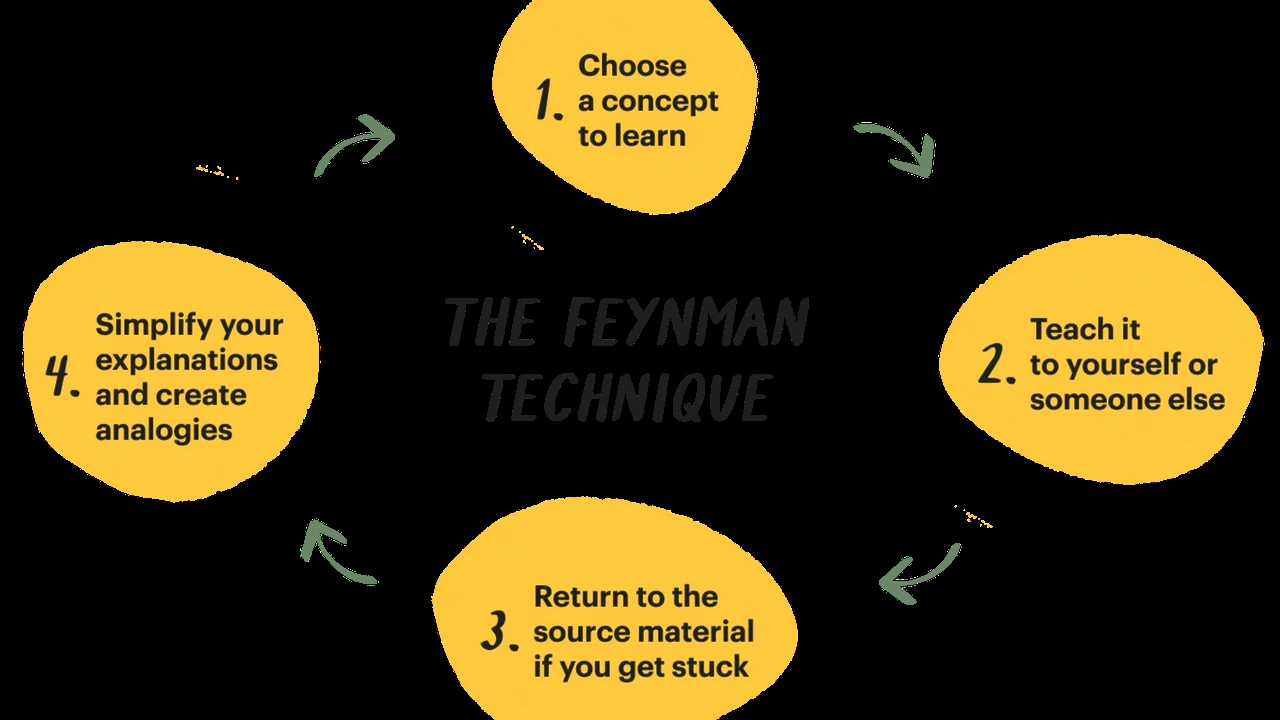
At its heart, the Feynman Technique is a four-step process designed to deepen your understanding of any subject. It's deceptively simple, but don't let that fool you – it's incredibly effective. Here are the steps:
- Choose a Concept: Pick the specific topic or concept you want to understand better.
- Teach it to a Child: Explain the concept in simple terms, as if you were teaching it to a 10-year-old. Use plain language, avoid jargon, and write it down.
- Identify Knowledge Gaps: As you explain, you'll inevitably stumble or realize you can't simplify certain parts. These are your knowledge gaps. Go back to your source material (books, lectures, articles) and re-learn those specific areas.
- Organize and Simplify: Once you've filled your gaps, review your explanation. Can you simplify it further? Can you use analogies? Make sure it flows logically and is easy to understand.
The magic happens in step two and three. When you try to explain something simply, you're forced to process the information in a different way than just passively reading or listening. You have to synthesize, organize, and articulate. And when you hit a wall, that's a clear signal that you haven't truly internalized that piece of information yet. It's a powerful feedback loop for your learning.
Why the Feynman Technique Works The Psychology of Deep Learning
There's a lot of cognitive science behind why this technique is so effective. It taps into several key principles of learning and memory:
- Active Recall: Instead of just re-reading, you're actively retrieving information from your memory. This strengthens neural pathways and makes the information easier to recall later.
- Elaboration: You're not just recalling facts; you're elaborating on them, connecting them to other ideas, and explaining their significance. This creates a richer, more interconnected understanding.
- Simplification and Analogy: Forcing yourself to simplify and use analogies helps you understand the core essence of a concept. If you can explain it without complex jargon, you truly get it.
- Identifying Gaps: This is crucial. Many learning methods don't explicitly highlight what you *don't* know. The Feynman Technique makes these gaps painfully obvious, allowing you to target your re-learning efforts precisely.
- Metacognition: It encourages you to think about your own thinking and learning process. You become more aware of your understanding and how you acquire knowledge.
Essentially, it moves you from passive consumption of information to active construction of knowledge. This is the difference between surface-level learning and deep, lasting understanding.
Applying the Feynman Technique Step-by-Step Guide and Practical Scenarios
Let's walk through how you can apply this technique in various learning scenarios. Remember, consistency is key!
Step 1 Choose Your Concept Identifying Your Learning Target
This might seem obvious, but be specific. Don't just say "I want to understand economics." Instead, pick a micro-concept like "the law of supply and demand" or "the concept of opportunity cost." For a programming language, it might be "how closures work in JavaScript" or "the difference between `let` and `const`." For history, "the causes of World War I." The more focused you are, the easier it will be to apply the technique.
Step 2 Teach it to a Child Simplifying Complex Ideas for Clarity
This is the core of the technique. Grab a blank piece of paper or open a new document on your computer. At the top, write down the concept you're trying to understand. Now, pretend you're explaining it to a bright 10-year-old. What would you say? How would you break it down? Use simple words. Avoid technical jargon unless you immediately explain what that jargon means in plain English. Write down everything you would say. Don't worry about perfection at this stage; just get your thoughts out.
Example Scenario: Explaining 'Blockchain'
Instead of saying: "Blockchain is a decentralized, distributed ledger technology that uses cryptographic hashes to link blocks of transactions, ensuring immutability and transparency."
You might say: "Imagine a special notebook that everyone in a group shares. Every time someone does something important, like sending money, they write it down in the notebook. But here's the cool part: once something is written, you can't ever erase it or change it. And everyone has their own copy of the notebook, so if one person tries to cheat, everyone else will know because their notebooks won't match. This makes it super safe and trustworthy!"
Step 3 Identify Knowledge Gaps Pinpointing Areas for Improvement
As you're writing your explanation, you'll inevitably hit snags. You might find yourself using jargon without being able to simplify it, or you might realize you don't quite understand *why* something works the way it does. These are your "knowledge gaps." Circle them, highlight them, make a note of them. This is where the real learning happens.
Once you've identified these gaps, go back to your original source material. Re-read the relevant sections, watch the lecture again, or look up additional resources specifically for those fuzzy areas. Don't just skim; actively try to understand *why* you didn't get it the first time. Once you feel you've grasped it, go back to your explanation and try to re-explain that part simply.
Step 4 Organize and Simplify Refining Your Understanding
After you've filled in your knowledge gaps, review your entire explanation. Is it clear? Is it concise? Can you make it even simpler? Look for any remaining jargon that could be replaced with plain language. Can you use a better analogy? Read it aloud. If it sounds clunky or confusing, refine it. The goal is an explanation that is so clear and straightforward that anyone, even a child, could understand the core concept.
This step is about polishing your understanding. It's not just about knowing the facts, but about being able to articulate them elegantly and effectively. This final simplification solidifies your grasp on the subject.
Tools and Resources for Implementing the Feynman Technique Enhancing Your Learning Workflow
While the Feynman Technique is primarily a mental exercise, certain tools can really enhance your workflow and make it more effective. You don't need anything fancy, but these can certainly help:
Digital Note-Taking Apps for Structured Explanations
Using digital tools can make organizing, editing, and refining your explanations much easier than traditional pen and paper, especially for longer or more complex topics. They also allow for easy searching and linking to source materials.
- Evernote: A classic for a reason. Great for capturing notes, web clippings, and organizing them into notebooks. You can easily create a new note for each concept and refine it over time. Its search function is powerful for finding related information.
- OneNote: Microsoft's answer to Evernote, often free with Windows. It offers a more free-form canvas, which can be great for mind-mapping or drawing connections as you explain. You can embed files, audio, and video directly into your notes.
- Notion: A versatile workspace that combines notes, databases, wikis, and project management. You can create dedicated pages for each concept, link them together, and even build a personal knowledge base. Its block-based editor is fantastic for structuring your explanations.
- Obsidian: For those who love plain text and building a "second brain." Obsidian uses Markdown files and allows you to link notes together, creating a visual graph of your knowledge. This is excellent for seeing how different concepts connect.
Usage Scenario: Create a dedicated notebook or folder for your "Feynman Explanations." Each new concept gets its own note. As you write your explanation, use different headings (H2, H3) for sub-points. When you identify a gap, highlight it in red or use a specific tag (e.g., #gap, #relearn). Once you've re-learned, update the section and remove the tag. The ability to easily edit and reorganize is a huge plus.
Mind Mapping Software for Visualizing Connections
Sometimes, explaining a concept isn't just about linear text. Visualizing how different parts of a concept connect can be incredibly helpful, especially in the "Organize and Simplify" step.
- XMind: A popular and robust mind-mapping tool available on multiple platforms. It allows you to create complex maps with different structures, add notes, images, and links. Great for breaking down a concept into its constituent parts and seeing the relationships.
- MindMeister: A web-based mind-mapping tool that's excellent for collaboration (if you're learning with others) and easy to use. It's intuitive for quickly sketching out ideas and refining them.
- Coggle: Another web-based option known for its clean interface and collaborative features. It's good for creating simple, elegant mind maps that focus on clarity.
Usage Scenario: Before you start writing your explanation, or during the "Identify Gaps" phase, use a mind map to visually break down the concept. Put the main concept in the center, and then branch out with its key components, definitions, examples, and how they relate to each other. This can help you structure your verbal explanation more logically.
Flashcard Apps for Reinforcing Core Definitions and Concepts
While the Feynman Technique is about deep understanding, flashcards are excellent for reinforcing the foundational definitions and facts that underpin those concepts. They work well in conjunction with the technique.
- Anki: The gold standard for spaced repetition flashcards. It's highly customizable and incredibly effective for long-term memory retention. You can create cards for key terms, formulas, or simplified explanations you've developed using the Feynman Technique.
- Quizlet: A more user-friendly option, great for creating flashcards, quizzes, and games. It's popular for language learning but can be used for any subject.
Usage Scenario: After you've gone through the Feynman Technique for a concept, create Anki flashcards based on your simplified explanation. For example, one side could be "Explain [Concept X] simply," and the other side would be your refined explanation. Or, for specific terms, one side is the term, the other is your simplified definition. This helps you actively recall the simplified version regularly.
Voice Recorders or Video Tools for Verbal Explanations
Remember, the technique is about *explaining* to a child. Sometimes, speaking it aloud is more effective than just writing. It forces you to articulate your thoughts in real-time.
- Smartphone Voice Recorder: Most smartphones have a built-in voice recorder. Simple, effective, and always with you.
- Loom: A free screen recording tool that also records your webcam and microphone. You can record yourself explaining a concept, perhaps even drawing on a digital whiteboard or showing examples on your screen. This is fantastic for self-assessment.
- Zoom/Google Meet (Self-Call): You can start a meeting with just yourself and record it. This gives you a virtual whiteboard and the ability to simulate a teaching environment.
Usage Scenario: Instead of writing, record yourself explaining the concept. Listen back to your recording. Where did you hesitate? Where did you use jargon without explaining it? Where did your explanation become convoluted? This auditory feedback can be incredibly insightful for identifying gaps you might miss when just writing.
Common Pitfalls and How to Avoid Them Maximizing Your Feynman Technique Success
While powerful, it's easy to fall into some traps when using the Feynman Technique. Being aware of these can help you get the most out of it.
Pitfall 1 Not Truly Simplifying Avoiding Jargon Traps
The biggest mistake is explaining something using complex terms, even if you understand them, rather than simplifying them for a 10-year-old. You might think you're simplifying, but if you're still using technical terms without breaking them down, you're missing the point.
How to Avoid: Constantly ask yourself, "Would a 10-year-old understand this word?" If not, find a simpler synonym or explain the jargon immediately. Use analogies from everyday life. Imagine the child's confused face if you use a complex term.
Pitfall 2 Skipping the Gap Identification Step The Illusion of Understanding
It's tempting to just write out an explanation and feel good about it. But the real power comes from actively seeking out what you *don't* know. If you don't identify and address your gaps, you're not truly deepening your understanding.
How to Avoid: Be brutally honest with yourself. When you stumble or feel unsure, mark that spot. Don't just gloss over it. Make a conscious effort to go back to your source material and specifically re-learn those areas. Treat those gaps as opportunities, not failures.
Pitfall 3 Not Going Back to Source Material Superficial Re-Learning
Once you identify a gap, it's not enough to just think about it. You need to actively engage with your learning resources to fill that gap. Just trying to remember what you vaguely read won't cut it.
How to Avoid: When a gap appears, stop. Go directly to your textbook, lecture notes, or a reliable online resource. Focus specifically on the part you didn't understand. Read it carefully, perhaps from a different source if the first one wasn't clear. Only when you feel you've truly grasped it should you return to your explanation.
Pitfall 4 Not Refining and Organizing The Messy Explanation
The final step isn't just a formality. It's where you polish your understanding into a coherent, elegant explanation. A messy, disorganized explanation indicates a messy, disorganized understanding.
How to Avoid: Dedicate time to this step. Read your explanation aloud. Does it flow logically? Are there any redundant phrases? Can you combine ideas? Think about how you would present this to someone. A clear structure and simple language are hallmarks of deep understanding.
Pitfall 5 Using it Only Once The Need for Iteration
The Feynman Technique is not a one-and-done solution. For truly complex topics, you might need to iterate through the steps multiple times over days or weeks. Your understanding will deepen with each pass.
How to Avoid: Treat learning as an ongoing process. Revisit your explanations periodically, especially for core concepts. As you learn more, you might find even simpler ways to explain things, or you might uncover new nuances you missed before. This iterative process is how true mastery is built.
Integrating the Feynman Technique into Your Study Routine A Holistic Approach to Learning
The Feynman Technique isn't meant to replace all other study methods, but rather to complement them. Think of it as a powerful tool in your learning arsenal, especially for those concepts that just aren't sticking.
Combine with Spaced Repetition for Long-Term Retention
Once you've used the Feynman Technique to deeply understand a concept, create flashcards (using Anki or Quizlet) based on your simplified explanation. This ensures that you regularly recall and reinforce that understanding over time, preventing the forgetting curve from taking hold.
Use Before and After Lectures or Readings for Enhanced Comprehension
Before: Briefly try to explain what you *think* you know about a topic before a lecture or reading. This primes your brain and highlights existing gaps, making you more receptive to new information. You'll know exactly what to listen or look for.
After: Immediately after a lecture or reading, apply the Feynman Technique to the key concepts. This helps consolidate the information while it's still fresh in your mind and quickly identifies anything you didn't quite grasp.
Apply to Problem-Solving and Practical Skills
The technique isn't just for theoretical knowledge. If you're learning to code, try explaining *why* a particular algorithm works or *how* a specific function achieves its goal. For a practical skill like cooking, explain the *science* behind why certain ingredients react the way they do. This deepens your practical understanding beyond just following instructions.
Teach Others or Form Study Groups for Collaborative Learning
The "teach it to a child" step doesn't have to be hypothetical. If you have a friend, family member, or study partner, try explaining concepts to them. Their questions will often expose your blind spots. Study groups can be incredibly effective for this, as everyone can take turns explaining different topics.
Regular Review and Iteration for Continuous Improvement
Make the Feynman Technique a regular part of your review process. Don't just re-read notes; actively try to explain concepts from memory. The more you practice explaining, the better you'll become at understanding and articulating complex ideas. It's a skill that improves with practice, just like any other.
So, there you have it! The Feynman Technique is a game-changer for anyone serious about truly understanding what they're learning. It's simple, effective, and backed by solid cognitive principles. Give it a try, and you might just surprise yourself with how much deeper your knowledge becomes. Happy learning!
:max_bytes(150000):strip_icc()/277019-baked-pork-chops-with-cream-of-mushroom-soup-DDMFS-beauty-4x3-BG-7505-5762b731cf30447d9cbbbbbf387beafa.jpg)