Virtual Reality and Augmented Reality in Education The Future is Here
Learn about Virtual Reality and Augmented Reality in education. The future of immersive learning experiences is here.
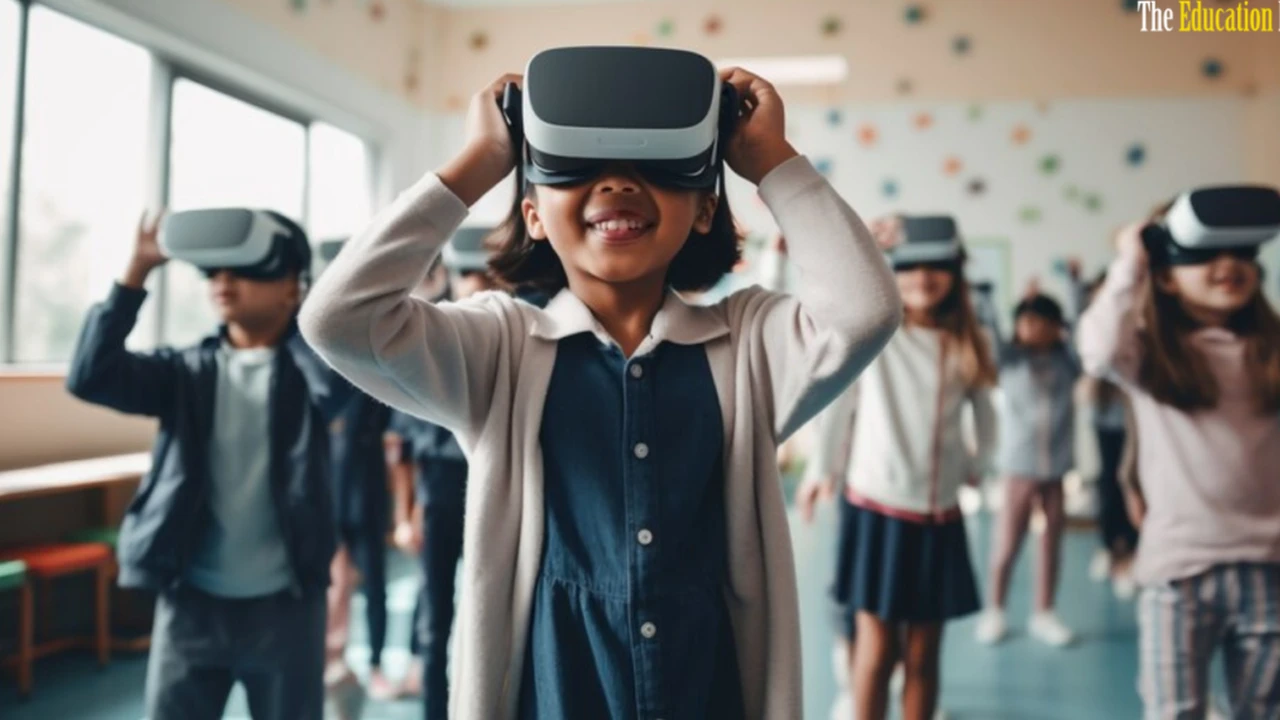
Learn about Virtual Reality and Augmented Reality in education. The future of immersive learning experiences is here.
Virtual Reality and Augmented Reality in Education The Future is Here
Hey everyone! Let's dive into something super exciting that's totally changing how we learn: Virtual Reality (VR) and Augmented Reality (AR) in education. Forget boring textbooks and endless lectures; we're talking about stepping into a whole new world of immersive learning. It's not just sci-fi anymore; these technologies are here, and they're making education more engaging, effective, and frankly, a lot more fun.
Understanding VR and AR Key Differences for Educators
Before we get too deep, let's quickly clear up what VR and AR actually are, because people often mix them up. Think of it this way: VR completely immerses you in a simulated environment. You put on a headset, and suddenly, you're somewhere else – maybe exploring ancient Rome, dissecting a virtual frog, or walking on the moon. It's all about shutting out the real world and stepping into a digital one.
AR, on the other hand, overlays digital information onto your real-world view. You're still seeing your actual surroundings, but with added digital elements. Imagine pointing your phone at a historical landmark and seeing a 3D model pop up on your screen, explaining its history. Or perhaps you're learning about human anatomy, and a 3D heart appears floating above a textbook page. It enhances your reality rather than replacing it.
Both have incredible potential in education, but they offer different experiences and cater to different learning scenarios. VR is fantastic for deep, experiential learning where full immersion is key, while AR excels at providing contextual information and interactive overlays in real-world settings.
Why VR and AR are Game Changers for Immersive Learning Experiences
So, why are these technologies such a big deal for education? Well, for starters, they tackle some of the biggest challenges in traditional learning head-on. Think about engagement: how many times have you zoned out during a lecture? VR and AR make learning active and exciting. Instead of just reading about something, you're experiencing it.
Enhanced Engagement and Motivation in VR AR Classrooms
When students are actively participating in a virtual environment, their engagement skyrockets. Imagine learning about volcanoes by virtually standing at the edge of an erupting one, or understanding physics by manipulating objects in a zero-gravity simulation. This kind of hands-on, experiential learning is incredibly motivating and makes abstract concepts tangible.
Improved Retention and Understanding with Immersive Technologies
Studies have shown that experiential learning leads to much better retention. When you've 'done' something, even virtually, you remember it far better than just reading or hearing about it. VR and AR allow students to visualize complex data, explore intricate models, and practice skills in a safe, repeatable environment. This deepens understanding and makes knowledge stick.
Accessibility and Equity in Education VR AR Solutions
Another huge benefit is accessibility. VR and AR can bring experiences to students who might otherwise never have them. A student in a remote village can virtually visit the Louvre, or a medical student can practice complex surgeries without needing expensive cadavers or specialized equipment. It democratizes access to high-quality, immersive learning experiences, breaking down geographical and financial barriers.
Safe and Cost-Effective Training Simulations with VR AR
For vocational training, VR and AR are revolutionary. Think about training pilots, surgeons, or engineers. These fields require extensive, often dangerous, and expensive practical training. VR simulations allow trainees to practice critical skills in a risk-free environment, making mistakes without real-world consequences. This not only improves safety but also significantly reduces training costs in the long run.
Top VR and AR Products for Educational Institutions and Individual Learners
Alright, let's get to the good stuff: what specific products are out there that educators and learners can actually use? The market is growing fast, but here are some of the leading contenders, along with their typical use cases and price points.
VR Headsets for Immersive Educational Experiences
When it comes to VR, the headset is your gateway. Here are a few popular options:
Meta Quest 3 The All-in-One VR AR Headset for Learning
- Description: The Meta Quest 3 is a standalone VR headset that also offers impressive mixed reality (a blend of VR and AR) capabilities. It's user-friendly, doesn't require a powerful PC, and has a vast library of apps.
- Use Cases: Ideal for virtual field trips (e.g., exploring historical sites, outer space), interactive science experiments (e.g., virtual chemistry labs), language learning (e.g., practicing conversations with AI characters in virtual environments), and vocational training simulations. Its mixed reality features also allow for AR overlays in a classroom setting.
- Comparison: More powerful and versatile than its predecessor (Quest 2), offering better graphics and mixed reality. Easier to set up and use than PC-tethered headsets like Valve Index, making it great for classrooms.
- Price: Around $499 USD.
Pico 4 Enterprise VR Headset for Professional Training
- Description: The Pico 4 Enterprise is another strong contender in the standalone VR space, often favored for business and educational deployments due to its enterprise-focused features and support. It offers a comfortable design and good visual fidelity.
- Use Cases: Excellent for corporate training, medical simulations (e.g., surgical training, patient interaction), engineering design reviews, and collaborative virtual classrooms. Its enterprise focus means better device management for institutions.
- Comparison: Similar to Meta Quest 3 in standalone capability but often preferred by organizations for its enterprise features and privacy controls.
- Price: Around $899 USD (Enterprise version).
HP Reverb G2 High-Resolution VR for Detailed Learning
- Description: The HP Reverb G2 is a PC-tethered VR headset known for its incredibly high resolution and excellent visual clarity, making it perfect for applications where detail matters.
- Use Cases: Best for advanced scientific visualization, detailed engineering and architectural design, medical imaging, and any scenario where high-fidelity graphics are crucial for learning. Requires a powerful gaming PC.
- Comparison: Offers superior visual clarity compared to standalone headsets but lacks portability and requires a dedicated PC.
- Price: Around $599 USD.
AR Devices for Contextual and Interactive Learning
AR experiences can be delivered through various devices, from smartphones to dedicated glasses.
Smartphones and Tablets Accessible AR for Every Student
- Description: Most modern smartphones and tablets (iOS with ARKit, Android with ARCore) are powerful AR devices. They use their cameras to overlay digital content onto the real world.
- Use Cases: Widely accessible for AR apps like 'Anatomy 4D' (overlaying human organs onto a body), 'Google Arts & Culture' (viewing historical artifacts in your living room), interactive textbooks, and field guides that provide information about plants or animals in real-time.
- Comparison: The most affordable and widely available AR solution. While not as immersive as dedicated AR glasses, it's perfect for introductory AR experiences and classroom integration.
- Price: Free (if you already own a device), app prices vary.
Microsoft HoloLens 2 Enterprise AR for Advanced Training
- Description: The HoloLens 2 is a sophisticated, untethered AR headset designed for enterprise and industrial use. It projects holograms directly into your field of view, allowing for hands-free interaction.
- Use Cases: Excellent for complex vocational training (e.g., machinery repair, assembly instructions), remote assistance for technical tasks, medical education (e.g., visualizing patient data during surgery), and collaborative design.
- Comparison: A high-end, professional-grade AR device offering true hands-free mixed reality. Far more capable than smartphone AR but also significantly more expensive.
- Price: Around $3,500 USD.
Magic Leap 2 High-Fidelity AR for Developers and Researchers
- Description: Magic Leap 2 is another advanced AR headset, focusing on high-fidelity visuals and a wide field of view. It's often targeted at developers and researchers pushing the boundaries of AR.
- Use Cases: Similar to HoloLens 2, it's used for advanced training, design, and visualization, particularly in fields requiring precise spatial computing and detailed digital overlays.
- Comparison: Competes with HoloLens 2, often praised for its visual quality and comfort. Both are premium devices for specialized applications.
- Price: Around $3,299 USD.
Comparing VR and AR Platforms and Content Ecosystems for Learning
It's not just about the hardware; the content and platforms are equally important. Here's a look at some key players:
Engaging VR Content Platforms for Education
- EngageVR: This platform is specifically designed for virtual meetings, classrooms, and training. It allows educators to create immersive lessons, host virtual events, and conduct training simulations in a highly interactive 3D environment. It's great for collaborative learning and remote education.
- VictoryXR: Offers a wide range of K-12 and higher education VR curricula, including virtual field trips, science labs, and historical recreations. They partner with schools to integrate VR into existing lesson plans.
- Labster: Focuses on virtual science labs, providing realistic simulations for biology, chemistry, and physics. Students can conduct experiments that would be too dangerous, expensive, or time-consuming in a real lab.
- Medical Realities: Specializes in VR surgical training, allowing medical students to observe and even participate in virtual operations.
Interactive AR Applications for Enhanced Learning
- Google Expeditions (now integrated into Google Arts & Culture): Offers AR tours and lessons, allowing students to explore historical sites, natural wonders, and even the human body in their classroom.
- Merge EDU (Merge Cube): Uses a physical cube that, when viewed through a smartphone or tablet, transforms into various 3D objects (e.g., planets, organs, historical artifacts) that students can interact with.
- AR Flashcards: Simple yet effective apps that bring flashcards to life with 3D models and animations, making learning vocabulary or concepts more engaging.
- Sketchfab: A platform where users can upload and download 3D models, many of which can be viewed in AR, providing a vast library of educational content.
Practical Implementation Strategies for VR AR in Classrooms and Training
So, how do you actually bring these technologies into a learning environment? It's not as simple as just buying a headset, but it's definitely doable with some planning.
Integrating VR AR into Existing Curricula Best Practices
The key is to integrate VR and AR thoughtfully, not just as a gimmick. Identify specific learning objectives that can be significantly enhanced by immersive experiences. For example, if you're teaching about the solar system, a VR experience where students can fly through space and land on planets is far more impactful than just looking at pictures. Start small, perhaps with a few headsets for a specific unit, and then expand as you gain experience.
Teacher Training and Support for VR AR Adoption
Teachers need to be comfortable with the technology. Provide adequate training on how to set up, troubleshoot, and effectively use VR and AR tools in their lessons. Ongoing support is crucial to ensure smooth implementation and to help educators discover new ways to leverage these tools.
Managing VR AR Hardware and Software in Educational Settings
For institutions, managing multiple headsets and software licenses can be a challenge. Look for enterprise solutions that offer centralized device management, content distribution, and user analytics. Consider dedicated VR/AR labs or mobile carts that can be shared among classrooms.
Budgeting for VR AR Technology in Education Cost Considerations
While prices are coming down, VR and AR still represent a significant investment. Start with more affordable options like smartphone AR or a few standalone VR headsets. Explore grants, partnerships with tech companies, and pilot programs to fund initial implementations. Remember to factor in not just hardware costs, but also software licenses, content development (if applicable), and ongoing support.
The Future Outlook for VR and AR in Learning and Skill Development
What's next for VR and AR in education? The horizon looks incredibly bright. We're just scratching the surface of what's possible.
Advancements in VR AR Hardware and Software for Education
Expect headsets to become lighter, more comfortable, and more powerful, with even better resolution and wider fields of view. Haptic feedback (the sense of touch) will become more sophisticated, making virtual interactions feel even more real. AI integration will lead to more intelligent virtual tutors and adaptive learning environments that personalize the experience for each student.
Personalized Learning Paths with Adaptive VR AR Experiences
Imagine an AR textbook that adapts its content based on your understanding, or a VR tutor that identifies your learning style and adjusts its teaching methods accordingly. This level of personalization will make learning incredibly efficient and effective.
The Metaverse and Collaborative Learning Environments
The concept of the metaverse, a persistent, interconnected virtual world, holds immense potential for collaborative learning. Students from different parts of the globe could meet in a virtual classroom, work on projects together, and explore shared virtual spaces, fostering a truly global learning community.
Ethical Considerations and Best Practices for Immersive Education
As with any powerful technology, there are ethical considerations. We need to think about data privacy, screen time, potential for digital divide, and ensuring equitable access. Developing best practices for responsible and effective use of VR and AR in education will be crucial as these technologies become more widespread.
So, there you have it. VR and AR aren't just cool gadgets; they're powerful tools that are reshaping the educational landscape. They promise a future where learning is not just about acquiring knowledge, but about experiencing it, interacting with it, and truly understanding it in ways we could only dream of before. Get ready, because the future of immersive learning is definitely here!
:max_bytes(150000):strip_icc()/277019-baked-pork-chops-with-cream-of-mushroom-soup-DDMFS-beauty-4x3-BG-7505-5762b731cf30447d9cbbbbbf387beafa.jpg)