Virtual Labs and Simulations for Hands-On Online Learning
Learn about virtual labs and simulations for hands-on online learning. Gain practical experience from anywhere.
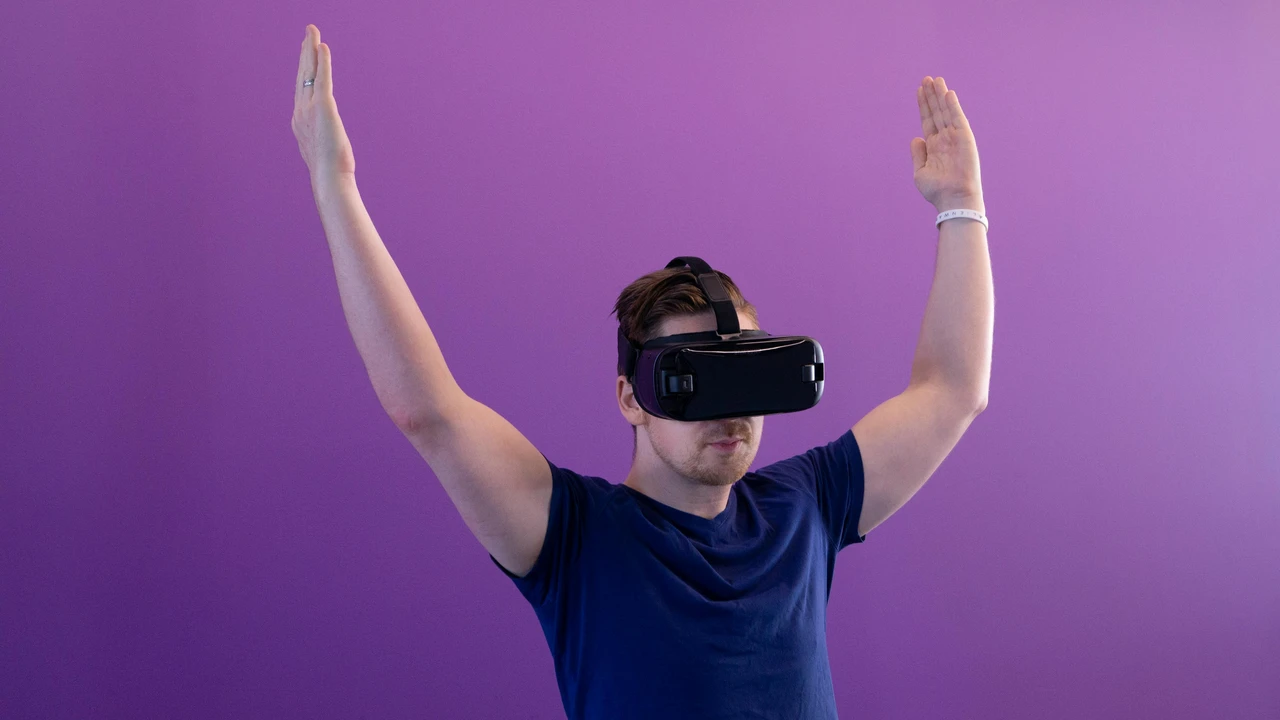
Learn about virtual labs and simulations for hands-on online learning. Gain practical experience from anywhere.
Virtual Labs and Simulations for Hands On Online Learning
Hey there, future innovators and lifelong learners! Ever felt like online learning, while super convenient, sometimes misses that crucial 'hands-on' element? You know, that feeling of actually doing something, experimenting, and getting your hands dirty (metaphorically speaking, of course)? Well, you're not alone. For a long time, that was one of the biggest hurdles for subjects like science, engineering, medicine, and even certain vocational skills. But guess what? The game has changed, and it's all thanks to virtual labs and simulations. These aren't just fancy tech buzzwords; they're powerful tools that are revolutionizing how we learn and acquire practical skills online, making it possible to gain real-world experience right from your living room, a coffee shop, or anywhere with an internet connection.
Imagine being able to conduct complex chemistry experiments without the risk of spills or explosions, dissect a virtual frog without any ethical dilemmas, or even practice intricate surgical procedures without ever touching a real patient. That's the magic of virtual labs and simulations. They bridge the gap between theoretical knowledge and practical application, offering immersive, interactive, and often incredibly realistic experiences that were once exclusive to physical classrooms and laboratories. This article is going to dive deep into the world of virtual labs and simulations, exploring what they are, why they're so important, and some of the best products out there that can help you gain invaluable hands-on experience, no matter your field of interest. We'll look at their features, how they're used, and even compare some popular options to help you make an informed choice. So, let's get started on this exciting journey into the future of practical online learning!
Understanding Virtual Labs and Simulations What Are They Exactly
Before we jump into specific products, let's get a clear picture of what we're talking about. When we say 'virtual labs' and 'simulations,' we're referring to digital environments that mimic real-world laboratories, equipment, and scenarios. They allow users to interact with virtual objects, perform experiments, and observe outcomes, all within a safe and controlled digital space. Think of it like a highly advanced video game, but instead of fighting dragons, you're mixing chemicals or designing a bridge.
Virtual Labs Exploring Digital Experimentation Environments
Virtual labs are essentially online platforms where you can conduct experiments using virtual equipment and reagents. They're designed to replicate the experience of a physical lab, often with detailed graphics and realistic physics. For example, in a virtual chemistry lab, you might have access to beakers, test tubes, Bunsen burners, and a wide array of chemicals. You can mix substances, heat them, observe reactions, and record data, just as you would in a real lab. The beauty of this is that you can make mistakes without consequences – no broken glassware, no hazardous fumes, and no wasted expensive materials. This freedom to experiment and fail is a huge learning advantage.
Simulations Immersive Scenario Based Learning
Simulations, on the other hand, often focus on replicating specific processes, systems, or real-world scenarios. They can range from simple interactive models to highly complex, immersive environments. For instance, a flight simulator allows aspiring pilots to practice flying an aircraft without ever leaving the ground. A medical simulation might let a student practice diagnosing a patient or performing a surgical procedure. Business simulations can help aspiring entrepreneurs test strategies in a virtual marketplace. The key here is the ability to experience and interact with dynamic systems, understand cause and effect, and develop decision-making skills in a risk-free setting.
Why Virtual Labs and Simulations Matter The Benefits for Online Learners
So, why are these tools becoming such a big deal in online education? The benefits are pretty compelling, especially for those of us who thrive on practical application and hands-on experience.
Accessibility and Inclusivity Breaking Down Barriers
One of the most significant advantages is accessibility. Not everyone has access to a fully equipped physical lab or specialized machinery. Virtual labs and simulations democratize practical learning, making it available to anyone with an internet connection, regardless of their geographical location or financial resources. This is particularly impactful in developing regions or for individuals with disabilities who might face barriers in traditional lab settings.
Safety and Risk Free Experimentation Learning Without Consequences
As mentioned earlier, safety is a huge factor. Imagine learning about nuclear physics or handling dangerous pathogens in a virtual environment. You can explore complex and potentially hazardous scenarios without any real-world risk. This allows for a much broader range of experiments and learning opportunities that would be impossible or too dangerous in a physical setting.
Cost Effectiveness Reducing Expenses for Institutions and Students
Setting up and maintaining physical labs is incredibly expensive, requiring specialized equipment, consumables, and safety protocols. Virtual alternatives significantly reduce these costs for educational institutions, which can translate into more affordable education for students. Plus, students don't have to worry about buying expensive textbooks or lab manuals that quickly become outdated.
Enhanced Engagement and Deeper Understanding Interactive Learning Experiences
Let's be honest, passively reading a textbook or watching a lecture can sometimes be a bit dry. Virtual labs and simulations are inherently interactive and engaging. By actively participating in experiments and scenarios, learners tend to retain information better and develop a deeper, more intuitive understanding of complex concepts. The ability to manipulate variables and see immediate results fosters a more active learning process.
Flexibility and Self Paced Learning Learn at Your Own Rhythm
Just like other forms of online learning, virtual labs and simulations offer incredible flexibility. You can access them anytime, anywhere, and work through experiments at your own pace. This is perfect for busy professionals, students with varying learning speeds, or anyone who prefers to learn outside of traditional schedules.
Repeatability and Mastery Practice Until Perfect
In a physical lab, repeating an experiment multiple times can be time-consuming and costly. In a virtual environment, you can repeat experiments as many times as you need to, refining your technique, testing different hypotheses, and truly mastering the concepts without any limitations. This iterative process is crucial for skill development.
Top Virtual Lab and Simulation Products for Diverse Fields Specific Recommendations
Alright, now for the exciting part! Let's look at some specific virtual lab and simulation products that are making waves in various educational and professional fields. We'll cover their features, typical use cases, and give you an idea of their pricing models.
Labster Immersive Science Education for Biology Chemistry and Physics
What it is: Labster is a leading platform offering fully interactive virtual lab simulations for biology, chemistry, physics, and engineering. They use advanced 3D graphics and gamified elements to create highly engaging and realistic lab experiences. Their simulations cover a vast range of topics, from DNA extraction and CRISPR gene editing to titration and quantum mechanics.
Key Features:
- High-fidelity 3D simulations: Visually stunning and scientifically accurate representations of lab equipment and processes.
- Gamified learning: Incorporates storytelling, challenges, and quizzes to keep learners engaged.
- Interactive experiments: Users actively perform steps, make decisions, and observe outcomes.
- Detailed feedback: Provides immediate feedback on performance and understanding.
- Curriculum alignment: Simulations are often aligned with university-level curricula and textbooks.
- Instructor dashboards: Tools for educators to track student progress and performance.
Typical Use Cases:
- Higher Education: Used by universities and colleges worldwide to supplement or replace traditional lab work in science courses.
- High School Science: Provides engaging and safe ways for high school students to explore complex scientific concepts.
- Professional Development: For professionals needing to refresh lab skills or learn new techniques.
Pricing: Labster primarily works with educational institutions, offering institutional licenses. For individual learners, access is often provided through their university or a specific course. Direct individual subscriptions are less common but sometimes available through partnerships with online course providers. Expect pricing to be part of a larger course fee or institutional package, rather than a simple monthly subscription for individuals.
PhET Interactive Simulations Free and Accessible Science and Math Tools
What it is: Developed by the University of Colorado Boulder, PhET Interactive Simulations are a fantastic collection of free, open-source, and highly interactive simulations for physics, chemistry, math, earth science, and biology. While not as graphically intensive as Labster, PhET simulations are incredibly powerful for conceptual understanding and exploring relationships between variables.
Key Features:
- Free and open-source: Accessible to everyone, everywhere.
- Intuitive interfaces: Easy to use, even for younger learners.
- Focus on conceptual understanding: Designed to help users grasp fundamental principles through exploration.
- Wide range of topics: Hundreds of simulations covering diverse scientific and mathematical concepts.
- Available in multiple languages: Supports global learning.
- Downloadable: Can be used offline once downloaded.
Typical Use Cases:
- K-12 Education: Widely used by teachers and students for interactive lessons and homework.
- Higher Education: Excellent for illustrating complex concepts in lectures or for students to explore independently.
- Self-Learners: Anyone wanting to understand scientific or mathematical principles through hands-on manipulation.
Pricing: Absolutely free! PhET is a non-profit project supported by grants and donations, making it an invaluable resource for global education.
OpenSim Biomechanical Simulation for Movement Analysis
What it is: OpenSim is a free, open-source software system that allows users to develop, analyze, and share models of the musculoskeletal system and dynamic simulations of movement. It's a powerful tool for researchers, engineers, and students in biomechanics, rehabilitation, and sports science.
Key Features:
- Musculoskeletal modeling: Create and customize detailed models of human and animal bodies.
- Dynamic simulations: Simulate movements like walking, running, and jumping.
- Inverse kinematics and dynamics: Analyze how forces and movements interact.
- Open-source community: Benefits from a large and active user and developer community.
- Integration with other tools: Can be used with programming languages like MATLAB and Python.
Typical Use Cases:
- Biomechanics Research: Used by scientists to study human movement, injury mechanisms, and rehabilitation strategies.
- Engineering Design: For designing prosthetics, orthotics, and assistive devices.
- Sports Science: Analyzing athletic performance and optimizing training techniques.
- Medical Education: For students studying anatomy, physiology, and kinesiology.
Pricing: Free. OpenSim is developed and maintained by Stanford University and is freely available for academic and non-commercial use.
Anatomage Table Advanced 3D Anatomy and Physiology Visualization
What it is: The Anatomage Table is a state-of-the-art 3D anatomy and physiology visualization system. While not a 'virtual lab' in the traditional sense of conducting experiments, it's an incredibly powerful simulation tool for medical and health sciences education. It features life-size, interactive 3D models of human and animal cadavers, allowing for virtual dissection and exploration of anatomical structures.
Key Features:
- Life-size interactive display: A large touchscreen table that feels like a real dissection table.
- High-resolution 3D cadavers: Based on actual human and animal cadaver data, offering unparalleled realism.
- Virtual dissection: Users can 'cut' through layers, isolate structures, and view systems in detail.
- Pathology and disease states: Includes models with various pathologies for diagnostic training.
- Radiology integration: View CT and MRI scans directly on the table.
- Quiz and assessment tools: Built-in features for self-assessment and instructor-led quizzes.
Typical Use Cases:
- Medical Schools: Used for anatomy, physiology, and pathology education, often supplementing or replacing traditional cadaver labs.
- Nursing and Allied Health Programs: For training in human anatomy and clinical procedures.
- Veterinary Medicine: Offers animal anatomy models for veterinary students.
- Museums and Science Centers: For public education and interactive exhibits.
Pricing: The Anatomage Table is a premium, high-end product primarily sold to institutions. It's a significant investment, typically costing tens of thousands of US dollars per unit. Individual access is usually through an institution that owns a table.
CircuitLab Online Circuit Simulator for Electronics and Electrical Engineering
What it is: CircuitLab is an in-browser circuit simulator that allows users to design, simulate, and analyze electronic circuits. It's a fantastic tool for students, hobbyists, and professional engineers to test circuit designs without needing physical components or a breadboard.
Key Features:
- Intuitive drag-and-drop interface: Easily build circuits with a wide range of components.
- Real-time simulation: See how your circuit behaves instantly.
- AC/DC analysis: Perform various types of circuit analysis.
- Waveform viewer: Visualize voltage and current waveforms.
- Extensive component library: Access to resistors, capacitors, inductors, transistors, op-amps, and more.
- Share and collaborate: Easily share circuit designs with others.
Typical Use Cases:
- Electrical Engineering Students: For learning circuit theory, designing projects, and troubleshooting.
- Electronics Hobbyists: Experimenting with new ideas and testing designs before building them.
- Professional Engineers: Rapid prototyping and verifying circuit concepts.
- STEM Education: Introducing students to basic electronics and circuit design.
Pricing: CircuitLab offers a free tier with limited features, suitable for basic experimentation. Paid plans start from around $20/month for individual users, offering more components, larger circuit sizes, and advanced analysis features. Institutional licenses are also available.
VRLab Academy Virtual Reality Labs for Engineering and Technical Skills
What it is: VRLab Academy specializes in virtual reality (VR) based training for engineering and technical skills. They offer immersive VR environments where users can practice operating heavy machinery, performing maintenance tasks, or conducting complex industrial processes. This is where the 'hands-on' gets truly immersive, requiring a VR headset.
Key Features:
- Immersive VR experience: Utilizes VR headsets for a highly realistic and engaging training environment.
- Realistic equipment interaction: Users can virtually manipulate tools and machinery.
- Procedural training: Guides users through step-by-step processes for complex tasks.
- Performance tracking: Monitors user actions and provides feedback on efficiency and accuracy.
- Customizable modules: Can be tailored to specific industry needs and equipment.
Typical Use Cases:
- Vocational Training: For trades like welding, heavy equipment operation, and industrial maintenance.
- Engineering Education: Practicing assembly, disassembly, and operational procedures for complex systems.
- Corporate Training: Onboarding new employees or upskilling existing staff in a safe, controlled environment.
- Safety Training: Simulating hazardous situations and practicing emergency procedures.
Pricing: VRLab Academy typically offers enterprise solutions and institutional licenses, with pricing varying significantly based on the number of users, modules required, and customization. Individual access is usually through an organization that has purchased their services. Expect a significant investment for this cutting-edge VR training.
SimScale Cloud Based Simulation for Engineering Analysis
What it is: SimScale is a cloud-native simulation platform for engineers, offering powerful tools for computational fluid dynamics (CFD), finite element analysis (FEA), and thermal analysis. It allows users to test and optimize designs virtually, from aerodynamics of a car to the structural integrity of a bridge, all within a web browser.
Key Features:
- Cloud-based platform: No need for powerful local hardware; simulations run on the cloud.
- CFD, FEA, and thermal analysis: Comprehensive suite of simulation capabilities.
- Intuitive interface: Designed to be user-friendly for engineers of all experience levels.
- Extensive material library: Access to a wide range of material properties for realistic simulations.
- Collaboration tools: Easily share projects and collaborate with team members.
- Community support: Active forum and resources for learning and troubleshooting.
Typical Use Cases:
- Mechanical Engineering: Designing and optimizing products, components, and systems.
- Aerospace Engineering: Analyzing airflow and structural performance.
- Civil Engineering: Simulating structural loads and environmental impacts.
- Product Design: Iterating on designs quickly and cost-effectively.
- Engineering Education: Teaching simulation principles and practical application.
Pricing: SimScale offers a free Community plan with limited core hours and public projects, which is great for students and hobbyists. Paid professional plans start from several hundred dollars per month, offering more core hours, private projects, and advanced features. Educational licenses are also available for institutions.
Choosing the Right Virtual Lab or Simulation What to Consider
With so many options out there, how do you pick the right virtual lab or simulation for your needs? Here are a few key factors to consider:
Learning Objectives What Do You Want to Achieve
First and foremost, what are your learning goals? Are you trying to understand basic scientific principles, practice a specific technical skill, or conduct advanced engineering analysis? Different platforms cater to different objectives. For conceptual understanding, PhET might be perfect. For detailed lab procedures, Labster could be ideal. For immersive technical training, VRLab Academy might be the way to go.
Field of Study and Specific Subject Matter Ensuring Relevance
Make sure the platform offers simulations relevant to your field. A medical student won't get much out of a circuit simulator, and an electrical engineer won't benefit as much from a virtual biology lab. Check the specific topics and experiments covered by each platform.
Level of Realism and Immersion How Deep Do You Need to Go
Do you need highly realistic 3D graphics and intricate interactions, or is a more conceptual, diagrammatic simulation sufficient? The level of realism often correlates with the complexity and cost of the platform. For some tasks, a simple simulation is enough; for others, like surgical training, extreme realism is crucial.
Technical Requirements and Accessibility Device Compatibility
Can you run the simulation on your current device? Some platforms are entirely web-based, while others require specific software installations or even VR headsets. Check the system requirements and ensure you have the necessary hardware and internet connection.
Cost and Pricing Model Budget Considerations
Virtual labs and simulations range from completely free (like PhET and OpenSim) to very expensive institutional solutions (like Anatomage Table and VRLab Academy). Understand the pricing model – is it a subscription, a one-time purchase, or part of a larger course fee? For individual learners, free or lower-cost subscription models are usually more accessible.
User Interface and Ease of Use Learning Curve
An intuitive and user-friendly interface can make a huge difference in your learning experience. Look for platforms that are easy to navigate and understand, especially if you're new to simulations. Many platforms offer free trials or demo versions, so take advantage of those to test the waters.
Support and Community Resources for Help
Does the platform offer good customer support, tutorials, or an active user community? Having resources available to help you troubleshoot issues or learn how to use advanced features can be incredibly valuable.
The Future is Hands On and Virtual Embracing the New Learning Paradigm
The landscape of online learning is constantly evolving, and virtual labs and simulations are at the forefront of this transformation. They're not just supplementary tools anymore; for many disciplines, they're becoming indispensable components of a comprehensive education. As technology continues to advance, we can expect these simulations to become even more realistic, interactive, and integrated into our learning experiences.
Imagine AI-powered virtual tutors guiding you through complex experiments, haptic feedback gloves allowing you to 'feel' virtual objects, or even collaborative virtual labs where students from around the world can work together on a single project in real-time. The possibilities are truly endless, and it's an incredibly exciting time to be a learner. So, whether you're a student looking to ace your science class, a professional aiming to upskill, or just a curious mind wanting to explore new concepts, don't shy away from virtual labs and simulations. They offer a powerful, safe, and engaging way to gain practical experience and truly master new skills, all from the comfort and convenience of your chosen learning space. Dive in, experiment, and discover the incredible potential of hands-on online learning!
:max_bytes(150000):strip_icc()/277019-baked-pork-chops-with-cream-of-mushroom-soup-DDMFS-beauty-4x3-BG-7505-5762b731cf30447d9cbbbbbf387beafa.jpg)