Personalized Learning Paths with Adaptive Technology Explained
Understand personalized learning paths with adaptive technology. Tailor your education to your unique needs and pace.
Understand personalized learning paths with adaptive technology. Tailor your education to your unique needs and pace.
Personalized Learning Paths with Adaptive Technology Explained
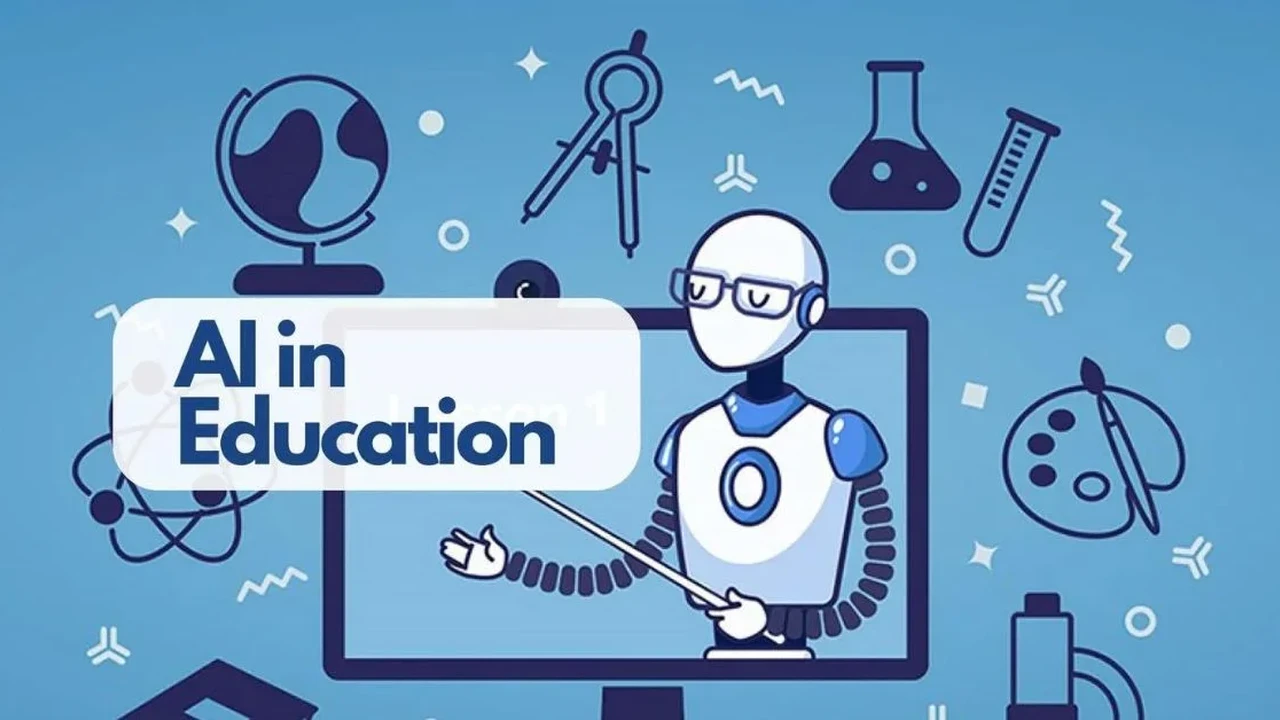
Hey there, future learners and educators! Ever felt like a square peg in a round hole when it comes to traditional education? You know, sitting through lectures on topics you already grasp, or struggling with concepts while the rest of the class moves on? Well, what if I told you there's a game-changer in the world of online learning that's all about you? We're talking about personalized learning paths powered by adaptive technology. This isn't just a fancy buzzword; it's a revolutionary approach that's reshaping how we acquire knowledge and skills, making education more efficient, engaging, and, most importantly, effective for every individual.
Think about it: traditional education often operates on a 'one-size-fits-all' model. Everyone gets the same curriculum, the same pace, the same assessments. But we're all different, right? We have unique learning styles, prior knowledge, strengths, and areas where we need a little extra help. Adaptive technology steps in to bridge this gap, creating a learning experience that literally adapts to your individual needs in real-time. It's like having a super-smart, infinitely patient tutor who knows exactly what you need, when you need it, and how you learn best.
So, how does this magic happen? At its core, adaptive technology uses algorithms and data to continuously assess your progress, identify your learning gaps, and then adjust the content, pace, and even the teaching method to optimize your learning journey. It's a dynamic process, constantly evolving with you. This means no more boredom from repetition, no more frustration from being left behind, and a much more efficient path to mastering new skills.
What is Adaptive Learning Technology and How Does it Work
Let's break down the nuts and bolts of adaptive learning technology. Imagine a sophisticated AI system that's constantly observing your interactions with learning material. It tracks everything: which questions you answer correctly, which ones you struggle with, how long you spend on certain topics, and even your engagement levels. This isn't just about right or wrong answers; it's about understanding the 'why' behind your performance.
Based on this continuous data collection, the adaptive system builds a detailed profile of your knowledge and learning patterns. If you ace a pre-assessment on a particular topic, it might skip you ahead to more advanced material. If you consistently make mistakes in a specific area, it will provide additional resources, different explanations, or practice problems tailored to reinforce that concept. It might even present the information in a different format – perhaps a video instead of text, or an interactive simulation – if it detects that you respond better to visual or hands-on learning.
The beauty of this approach lies in its responsiveness. It's not a static curriculum; it's a living, breathing learning environment that changes with you. This personalized feedback loop ensures that you're always challenged but never overwhelmed, keeping you in that sweet spot for optimal learning. It's about mastery, not just memorization. The goal is to ensure you truly understand a concept before moving on, building a solid foundation of knowledge.
Key Benefits of Personalized Learning Paths for Students and Educators
The advantages of personalized learning paths are pretty compelling, both for those doing the learning and those facilitating it. For students, the most obvious benefit is increased engagement and motivation. When learning feels relevant and tailored to your needs, it's naturally more interesting. You're not just passively consuming information; you're actively participating in a journey designed just for you. This leads to better retention of information and a deeper understanding of complex subjects.
Think about it: if you're a visual learner, getting more diagrams and videos will make a huge difference. If you learn by doing, more interactive exercises will be invaluable. Adaptive technology delivers exactly that. It also fosters a sense of ownership over your learning. You're not just following a prescribed path; you're navigating your own unique educational adventure, which can be incredibly empowering.
From an educator's perspective, adaptive technology is a superpower. It frees up valuable time that would otherwise be spent on grading repetitive assignments or trying to cater to 30 different learning styles in a single classroom. Instead, educators can focus on higher-level tasks like providing individualized mentorship, facilitating collaborative projects, and addressing specific student challenges that the technology might flag. It provides rich data insights into student performance, allowing teachers to identify trends, intervene proactively, and refine their teaching strategies. It's about augmenting human teaching, not replacing it.
Top Adaptive Learning Platforms and Their Unique Features
Alright, let's get to some concrete examples! The market for adaptive learning platforms is growing rapidly, and there are some fantastic options out there, each with its own strengths. Here are a few prominent players and what makes them stand out:
Knewton Alta Personalized Learning for Higher Education
Knewton Alta is a big name in the higher education space, particularly for college-level courses in subjects like math, economics, and chemistry. What makes Alta special is its deep integration with textbooks and course materials. It uses sophisticated algorithms to pinpoint exactly where a student is struggling and then provides targeted instruction and practice problems. It's not just about getting the right answer; it's about understanding the underlying concepts. Alta's adaptive engine continuously assesses student proficiency and confidence, adjusting the learning path accordingly. It's designed to ensure mastery of learning objectives, meaning you won't move on until you've truly grasped the material. It also offers detailed analytics for instructors, showing them exactly where their class, or individual students, are excelling or struggling. Pricing for students is typically per course, often around $40-$50 for a semester-long access, making it quite affordable compared to traditional textbooks and supplementary materials.
ALEKS Assessment and Learning in Knowledge Spaces for Math and Science
ALEKS, which stands for Assessment and Learning in Knowledge Spaces, is another powerhouse, especially renowned for its effectiveness in K-12 and higher education math and science courses. ALEKS starts with an initial assessment to determine exactly what you know and, more importantly, what you don't know. It then creates a highly individualized learning path, focusing only on the topics you're ready to learn. It uses a unique 'knowledge state' model, ensuring that prerequisite knowledge is firmly in place before introducing new concepts. The interface is often described as clean and straightforward, focusing on practice problems and immediate feedback. ALEKS is particularly strong in building foundational skills and ensuring long-term retention. It's widely used in schools and colleges, and individual student access can range from $20-$30 per month or around $100-$150 for a year-long subscription, depending on the specific course and institution.
DreamBox Learning Adaptive Math and Reading for K-8
For younger learners, DreamBox Learning is a fantastic example of adaptive technology in action. It focuses on K-8 math and reading, using a highly engaging, game-like interface to keep kids motivated. DreamBox's adaptive engine is incredibly sophisticated, making millions of real-time adjustments to the curriculum based on a child's responses. It doesn't just adapt to right or wrong answers; it analyzes the strategies a child uses, their speed, and even their hesitation. This allows it to provide truly personalized instruction that caters to each child's unique learning style and pace. It's designed to build conceptual understanding and fluency, making learning fun and effective. DreamBox is primarily sold to schools and districts, but individual home subscriptions are available, typically around $12.99 per month or $129.99 for an annual subscription per student.
Smart Sparrow Intelligent Tutoring for Custom Courseware
Smart Sparrow takes a slightly different approach, focusing on empowering educators and institutions to create their own adaptive courseware. It's a platform that allows instructors to design highly interactive and personalized learning experiences, often incorporating simulations, virtual labs, and complex problem-solving scenarios. Smart Sparrow's strength lies in its authoring tools, which enable educators to build sophisticated adaptive pathways without needing to be coding experts. It's particularly popular in fields requiring hands-on practice and critical thinking, such as engineering, medicine, and business. While not a direct-to-consumer product, its impact is felt through the custom courses developed on its platform by universities and corporations. Pricing is typically enterprise-level, based on institutional needs and student numbers.
Carnegie Learning MATHia Personalized Math Software
Carnegie Learning's MATHia is another excellent adaptive learning software specifically for mathematics, from middle school through college. MATHia uses artificial intelligence to provide a truly personalized learning experience, acting as a 1-to-1 tutor for each student. It focuses on developing deep conceptual understanding and problem-solving skills, not just rote memorization. The platform provides immediate, targeted feedback and hints, guiding students through challenging problems. It also offers a 'Cognitive Tutor' approach, which models student thinking and adapts instruction based on their cognitive processes. MATHia is often integrated into school curricula, and individual student licenses are typically purchased through educational institutions, with costs varying but generally comparable to other robust educational software.
Implementing Adaptive Learning in Various Educational Settings
Adaptive technology isn't just for online courses; it's making waves across various educational settings. In traditional classrooms, it can be used to differentiate instruction, allowing teachers to provide personalized support to students who need it while challenging those who are ready for more advanced material. This 'blended learning' approach combines the best of both worlds: the human connection of a teacher with the individualized power of adaptive tech.
For corporate training and professional development, adaptive learning is a game-changer. Companies can use these platforms to upskill their workforce efficiently, ensuring that employees gain the exact skills they need without wasting time on irrelevant content. This is particularly valuable in fast-evolving industries where continuous learning is crucial. Imagine a sales team getting personalized training modules based on their individual performance data, or a tech team learning new software features at their own pace.
In the realm of self-study, adaptive platforms empower individuals to take control of their learning journey. Whether you're learning a new language, preparing for a certification exam, or picking up a new hobby, these tools can guide you more effectively than a generic textbook or video series. They provide structure, accountability, and a clear path to mastery, making self-directed learning much more achievable and rewarding.
Challenges and Considerations for Adaptive Technology Adoption
While adaptive technology offers incredible promise, it's not without its challenges. One major consideration is data privacy and security. These platforms collect a lot of information about learners, and ensuring that this data is protected and used ethically is paramount. Transparency about data usage is key.
Another challenge is the initial investment and implementation. Developing or integrating sophisticated adaptive systems can be costly and require significant technical expertise. For smaller institutions or individual learners, access to these high-quality platforms might be a barrier, though many are becoming more affordable.
There's also the risk of over-reliance on technology. While adaptive systems are powerful, they are tools. The human element – the guidance of an experienced educator, the collaborative spirit of a learning community, and the intrinsic motivation of the learner – remains incredibly important. The best adaptive learning environments strike a balance, using technology to enhance, not replace, these crucial human aspects.
Finally, content quality is vital. An adaptive platform is only as good as the educational content it delivers. High-quality, well-designed learning materials are essential for effective adaptive learning. Poor content, even with the most advanced algorithms, won't lead to meaningful learning outcomes.
The Future of Personalized Learning and Adaptive Technology Trends
Looking ahead, the future of personalized learning with adaptive technology is incredibly exciting. We're likely to see even more sophisticated AI and machine learning algorithms that can understand not just what you know, but also how you feel about learning. Imagine systems that can detect frustration and offer a break, or recognize engagement and provide more challenging content.
Integration with virtual reality (VR) and augmented reality (AR) is another huge trend. Imagine learning complex surgical procedures in a VR environment that adapts to your skill level, or exploring historical sites with AR overlays that provide personalized information based on your interests. This immersive, adaptive experience could revolutionize hands-on learning.
We'll also see greater emphasis on 'learning analytics' – using the vast amounts of data collected by these platforms to gain deeper insights into the learning process itself. This data can inform educational research, improve course design, and help us understand how different individuals learn most effectively. This isn't just about improving individual learning; it's about advancing the science of learning.
Furthermore, the concept of 'lifelong learning' will become even more central, with adaptive platforms serving as continuous companions throughout our careers and personal development. As skills become obsolete faster, these personalized learning paths will be crucial for staying relevant and adaptable in a rapidly changing world. It's about creating a dynamic, responsive, and truly individualized educational experience that empowers everyone to reach their full potential, at their own pace, and in their own unique way.
:max_bytes(150000):strip_icc()/277019-baked-pork-chops-with-cream-of-mushroom-soup-DDMFS-beauty-4x3-BG-7505-5762b731cf30447d9cbbbbbf387beafa.jpg)