Wearable Technology in Education Enhancing Learning Experiences
Learn about wearable technology in education. Explore how smart devices can enhance learning experiences.
Learn about wearable technology in education. Explore how smart devices can enhance learning experiences.
Wearable Technology in Education Enhancing Learning Experiences
The Dawn of Wearable Tech in Learning What are Wearables
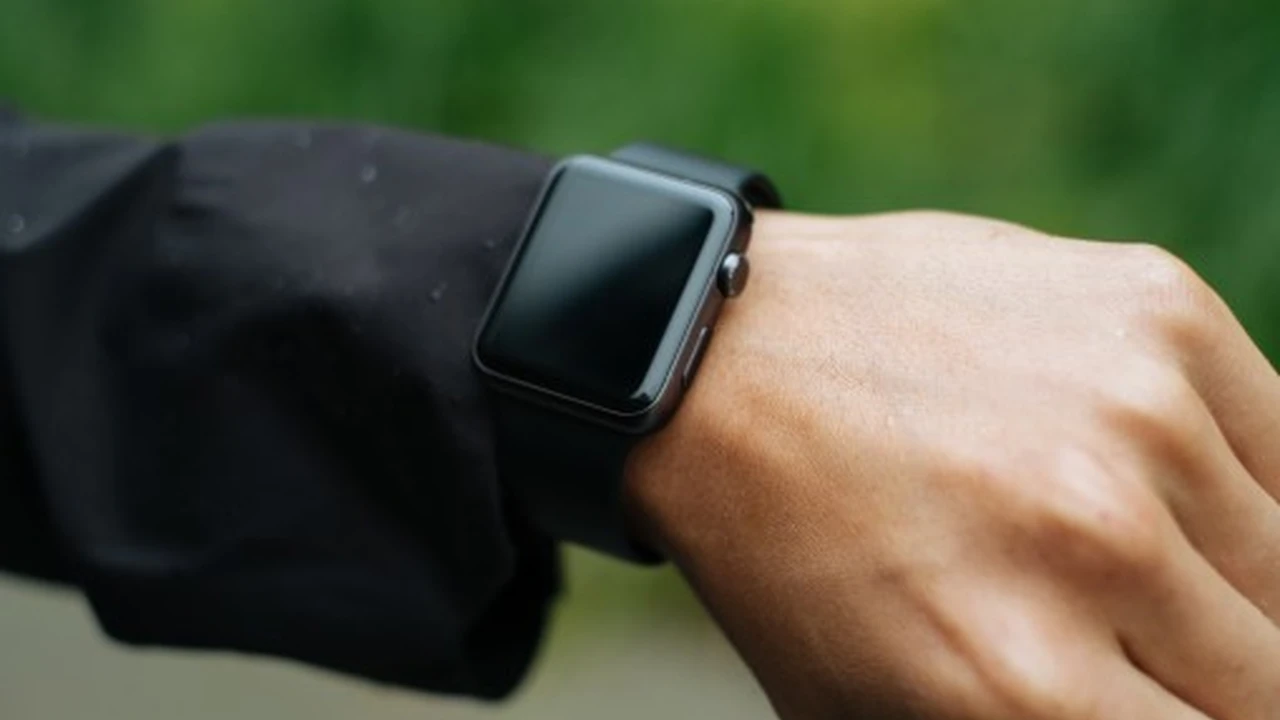
Hey there, ever thought about how those smartwatches or fitness trackers on your wrist could actually help you learn better? Well, you're not alone! Wearable technology, or 'wearables' as they're often called, are essentially electronic devices that you can wear on your body. They're designed to collect data about you or your surroundings, and then often connect to other devices or the internet to provide you with information or services. Think smartwatches, fitness trackers, smart glasses, and even smart clothing. While they've been a big hit in fitness and health, their potential in education is truly exciting and, frankly, still largely untapped. We're talking about a whole new dimension to how we interact with information and learn new skills. Imagine a world where your learning environment isn't just a classroom or a screen, but an extension of your own body, constantly providing feedback and enhancing your understanding. That's the promise of wearables in education.
Why Wearables Matter for Modern Education Benefits for Students and Educators
So, why should we even bother with these gadgets in schools and universities? The answer lies in the unique benefits they offer. For students, wearables can make learning more interactive and engaging. They can provide real-time feedback, personalize learning experiences, and even make abstract concepts more tangible. For example, a student learning about human anatomy could use an AR-enabled smart glass to overlay 3D models onto a textbook, bringing the diagrams to life. For educators, wearables offer powerful tools for tracking student progress, identifying learning gaps, and tailoring instruction to individual needs. Imagine a teacher receiving instant data on how well each student is grasping a concept, allowing them to intervene immediately. This isn't just about making learning 'cooler'; it's about making it more effective, more personalized, and more accessible. They can foster a more active learning environment, moving beyond passive consumption of information to active participation and exploration. The data collected can also be invaluable for educational research, helping us understand how people learn best.
Smartwatches and Fitness Trackers Beyond the Gym Learning Applications
When you think of smartwatches and fitness trackers, your mind probably jumps to counting steps or checking your heart rate. But these devices have a lot more to offer in an educational context. For instance, they can be used for time management, helping students stay on track with assignments and study schedules through discreet notifications. Imagine a smartwatch reminding a student to take a break after 45 minutes of studying, or alerting them to an upcoming deadline. They can also be used for interactive quizzes, delivering short, engaging questions directly to the wrist, making learning feel less like a chore and more like a game. In physical education, fitness trackers can help students understand their own bodies better, tracking activity levels and encouraging healthy habits, which in turn can improve focus and cognitive function. Some advanced models can even monitor stress levels, providing students with tools to manage anxiety during exams. The discreet nature of these devices also means they can be used in environments where a phone or tablet might be distracting or inappropriate, offering a subtle yet powerful learning aid.
Product Spotlight 1 Apple Watch Series 9 for Educational Productivity
The Apple Watch Series 9 is a prime example of a versatile wearable that can be incredibly useful in education. It's not just a fashion statement; it's a powerful mini-computer on your wrist. Its robust app ecosystem means there are countless applications that can aid learning. For instance, students can use it for:
- Time Management: Setting reminders for classes, study sessions, and assignment deadlines. The haptic feedback is subtle and effective.
- Quick Information Access: Checking definitions, currency conversions, or quick facts using Siri without pulling out a phone.
- Health and Wellness: Monitoring sleep patterns and activity levels, which are crucial for maintaining focus and energy for studying.
- Interactive Quizzes: Many educational apps offer watch-compatible mini-quizzes for quick knowledge checks.
- Communication: Receiving important notifications from learning platforms or classmates without distraction from a phone.
Use Case: A university student juggling multiple courses can use the Apple Watch to manage their schedule, receive discreet notifications for upcoming lectures, and even use a flashcard app for quick revision during short breaks. Its integration with the Apple ecosystem makes it seamless for those already using iPhones or iPads.
Price Range: Typically starts around $399 USD, varying by model and features (GPS vs. GPS + Cellular).
Product Spotlight 2 Fitbit Charge 6 for Health-Conscious Learners
While primarily a fitness tracker, the Fitbit Charge 6 offers features that indirectly support learning by promoting overall well-being. A healthy body and mind are fundamental to effective learning. Its key educational benefits include:
- Stress Management: The device tracks stress levels and offers guided breathing exercises, which can be invaluable for students facing exam anxiety or academic pressure.
- Sleep Tracking: Understanding sleep patterns helps students optimize their rest, leading to better concentration and memory retention.
- Activity Monitoring: Encouraging physical activity, which is proven to boost cognitive function and reduce stress.
- Goal Setting: Students can set personal health and activity goals, fostering discipline and self-management skills that transfer to academic pursuits.
Use Case: A high school student struggling with focus might use the Fitbit Charge 6 to monitor their sleep, ensure they're getting enough physical activity, and utilize the stress management features to stay calm during demanding study periods. The data can also be a conversation starter with parents or school counselors about overall well-being.
Price Range: Around $159 USD.
Smart Glasses and Augmented Reality Immersive Learning Experiences
Now, this is where things get really exciting! Smart glasses, often paired with Augmented Reality (AR) technology, have the power to transform how we visualize and interact with educational content. Unlike Virtual Reality (VR) which completely immerses you in a digital world, AR overlays digital information onto your real-world view. This means you can still see your classroom or lab, but with added layers of interactive content. Imagine a medical student using smart glasses to see a 3D anatomical model floating above a patient dummy, or an engineering student visualizing complex machinery parts in their actual workspace. This technology can make abstract concepts concrete, allow for hands-on (or rather, 'eyes-on') experimentation without physical resources, and provide contextual information exactly when and where it's needed. It's like having a digital tutor constantly providing relevant information right in your field of vision. The potential for field trips, historical reconstructions, and scientific experiments is truly mind-boggling. It moves learning from a two-dimensional screen to a three-dimensional, interactive experience.
Product Spotlight 3 Microsoft HoloLens 2 for Advanced AR Learning
The Microsoft HoloLens 2 is a leading mixed reality headset that offers unparalleled capabilities for immersive learning, particularly in higher education and vocational training. It's a professional-grade device, and its educational applications are vast:
- 3D Model Interaction: Students can interact with holographic 3D models of complex objects, from human organs to intricate machinery, rotating them, dissecting them, and understanding their internal workings.
- Remote Collaboration: Educators can guide students through virtual experiments or repairs from a distance, with both parties seeing the same holographic content.
- Hands-on Training Simulations: Ideal for fields like medicine, engineering, and manufacturing, allowing students to practice procedures in a safe, virtual environment before working with real equipment.
- Contextual Information: Overlaying data, instructions, or historical facts onto real-world objects or locations during field trips or lab sessions.
Use Case: A medical school could use HoloLens 2 to allow students to perform virtual dissections or practice surgical procedures on holographic patients, providing a risk-free environment for learning complex skills. An architecture student could visualize their building designs in a real-world setting before construction begins.
Price Range: Approximately $3,500 USD, reflecting its professional-grade capabilities.
Product Spotlight 4 Vuzix Blade 2 for Everyday AR Assistance
The Vuzix Blade 2 offers a more accessible entry into smart glasses, designed for everyday use and offering a more discreet form factor than the HoloLens. While not as powerful for complex 3D rendering, it excels at providing contextual information and notifications:
- Information Overlay: Displaying text, images, or simple graphics directly in the user's field of view, useful for language learning (subtitles for real-world conversations), historical site tours (information about landmarks), or technical instructions.
- Hands-Free Access: Students can access notes, formulas, or quick facts without needing to look down at a phone or tablet, keeping their hands free for other tasks.
- Navigation and Guidance: Providing directions or step-by-step instructions for practical tasks or experiments.
- Remote Expert Assistance: An instructor can see what a student sees and provide real-time guidance, useful for vocational training or remote learning scenarios.
Use Case: A student learning a new language could wear the Vuzix Blade 2 to see translations of signs or objects in real-time. A technician-in-training could receive step-by-step repair instructions overlaid on the equipment they are working on, reducing errors and speeding up learning.
Price Range: Around $1,999 USD.
Smart Clothing and Haptic Feedback A New Dimension of Learning
This might sound like something out of a sci-fi movie, but smart clothing is already here, and its educational applications are starting to emerge. We're talking about garments embedded with sensors and actuators that can collect data or provide haptic (touch-based) feedback. Imagine a smart shirt that monitors a dancer's posture and provides subtle vibrations to correct their form, or a jacket that teaches you how to play a musical instrument by guiding your arm movements. This technology offers a truly immersive and kinesthetic learning experience, especially valuable for subjects that require physical precision or understanding of movement. It can provide immediate, tactile feedback that a visual or auditory cue simply can't replicate. This is particularly beneficial for vocational training, sports, music, and even rehabilitation, where muscle memory and precise movements are key. It's about learning by doing, but with an intelligent, wearable coach constantly guiding you.
Product Spotlight 5 HaptX Gloves DK2 for Tactile Skill Development
While not strictly 'clothing' in the traditional sense, HaptX Gloves DK2 represent the cutting edge of haptic feedback wearables, offering incredibly realistic touch and force feedback. These are primarily used in professional training and simulation but have immense potential for educational settings requiring fine motor skill development:
- Realistic Tactile Feedback: Users can 'feel' virtual objects with unprecedented realism, including texture, shape, and resistance.
- Fine Motor Skill Training: Ideal for training surgeons, engineers, or technicians on delicate procedures in a virtual environment.
- Immersive Simulations: Enhances VR/AR training by adding the sense of touch, making simulations far more effective for muscle memory development.
- Safe Practice: Allows students to practice dangerous or complex tasks without risk to themselves or expensive equipment.
Use Case: A student learning to perform delicate microsurgery could use HaptX Gloves in a VR simulation to practice suturing or manipulating tiny instruments, feeling the resistance and texture as if they were working with real tissue. An automotive technician could practice assembling complex engine parts virtually, feeling each component snap into place.
Price Range: These are high-end professional devices, typically costing tens of thousands of dollars, often sold as part of a complete simulation system. Not for individual student purchase, but for institutional use.
Challenges and Considerations The Road Ahead for Wearables in Education
Of course, it's not all sunshine and rainbows. Integrating wearables into education comes with its own set of challenges. Cost is a major factor; many of these devices, especially the more advanced AR glasses or haptic gloves, are expensive, making widespread adoption difficult for many institutions, particularly in developing regions. Privacy concerns are also paramount. Wearables collect a lot of personal data, and ensuring this data is protected and used ethically is crucial. Who owns the data? How is it stored? Who has access? These are questions that need clear answers. Technical infrastructure is another hurdle; reliable Wi-Fi, charging stations, and IT support are essential for managing a fleet of wearable devices. Then there's the challenge of curriculum integration. Simply handing out smartwatches won't magically improve learning; educators need training and support to effectively incorporate these tools into their teaching methodologies. We also need to consider the potential for digital divide, where students without access to these technologies might be left behind. Finally, there's the question of distraction. While designed to enhance learning, any new technology can also be a source of distraction if not managed properly. Addressing these challenges will be key to unlocking the full potential of wearables in education.
The Future is Wearable How Education Will Evolve
Despite the challenges, the future of wearables in education looks incredibly promising. As the technology becomes more affordable, powerful, and user-friendly, we can expect to see even more innovative applications. Imagine personalized learning environments that adapt to a student's emotional state, or real-time language translation glasses that break down communication barriers in global classrooms. We might see wearables that monitor cognitive load, adjusting the pace of learning to prevent burnout, or devices that provide biofeedback to help students manage anxiety during presentations. The integration of AI with wearables will lead to even more intelligent and responsive learning companions. The goal isn't to replace human teachers, but to augment their capabilities and empower students with tools that make learning more intuitive, engaging, and effective. As we move forward, wearables will likely become an integral part of the educational landscape, transforming how we acquire knowledge, develop skills, and interact with the world around us. It's an exciting journey, and we're just at the beginning of understanding how these tiny devices can make a massive impact on how we learn and grow.
:max_bytes(150000):strip_icc()/277019-baked-pork-chops-with-cream-of-mushroom-soup-DDMFS-beauty-4x3-BG-7505-5762b731cf30447d9cbbbbbf387beafa.jpg)